
Finding Pueblo Residents by Record Type
Treat the Pueblo residents directory as a relay rather than one lookup. Each clue hands off to a different custodian. A name can lead to the assessor's owner file. A street address points the same way, toward the situs parcel. Elections can confirm a public registration record when the required inputs line up. A court docket supplies a dated case event. The Historical Society and Rawlings Library answer for earlier generations and old address clues. Keep those roles separate. No combination of them proves a person lives at a particular place today.
Begin with the least sensitive clue you already hold. Note the exact spelling, the date searched, and the field that produced the result. A resident lookup gains real strength when a parcel number, case number, middle initial, license number, or edition year agrees across two sources. A no-result is not the last word. It may reflect a protected voter, a narrow moving date window, an incomplete digitization run, or a street name that changed along the way.
- Write down the full name, spelling variants, known ZIP or street, and the reason for the search.
- Run the Pueblo County Assessor search by owner, location, or parcel, then label owner, mailing, and situs fields separately.
- Use the Colorado voter lookup only with a lawful full name, ZIP, and birthday, and test a prior ZIP when the official instructions suggest it.
- Check the Colorado Judicial docket with Pueblo County or Pueblo Combined Court, a narrow date range, and the party fields.
- For an older clue, compare the Historical Society directories, Rawlings catalog, Chieftain material, obituary scans, and maps by year.
Where Pueblo Keeps Resident Records
Pueblo County splits the resident trail among offices, and the split is clean. The Clerk and Recorder holds the permanent layer: deeds, plats, surveys, military records, and more. The Assessor carries parcel, owner, mailing, situs, value, transfer, and tax information. Elections manages registration and election reports under field-level confidentiality rules. Colorado courts, Public Health, city archives, libraries, and state licensing systems each answer a narrower question. So the office holding a clue tells you what the clue means.
Pueblo County Clerk and Recorder
215 W 10th Street, second floor
Pueblo, CO 81003
719-583-6507
Pueblo County Assessor Route
Property information and map services
Pueblo County, CO
719-583-6100 for property context
Pueblo County Elections
201 W 8th Street, seventh floor
Pueblo, CO 81003
719-583-6620
Recording and Elections sit on different floors and serve different records, so route questions accordingly. Recorder staff can be reached at recording@pueblocounty.us. Elections accepts requests through the county Information Request form, mail, email, or the counter. Name the record, the date, and the address. Then name the output you want, rather than asking for a general list of residents.
What a Pueblo Address Actually Means
An address in Pueblo is more than a label. The May 2010 City-County Addressing Standards split it into four parts. Those parts are a site address, a building address, an establishment address, and a mailing address. The city grid measures from First Street and Santa Fe Avenue. County references hang on I-25 and US Highway 50. Numbers run odd on the north and west sides. They run even on the south and east. Circular streets get exceptions.
Complications multiply from there. Units, suites, rear structures, private drives, and multiple buildings can all sit under one base number. Each one can create a distinct entry. The master address system also preserves alias roadway names from historical renaming or common use. Keep the old form beside the current one. A street directory lookup that normalizes the old spelling away can miss something. It might miss a directory, plat, deed, or Sanborn reference.
That is why the Pueblo addressing standards belong in any residents directory search. They explain a common puzzle. A postal last line, a parcel situs, a voter address, and a historical entry may not match word for word.
Recorder Names Along the Trail
The Pueblo County Recorder's online index is a free first stop for grantor and grantee names. It also covers instrument type, reception number, and recording date. The county's own disclaimer compares it to a library card catalog. It points to documents but is not the deed itself. Try spelling variants. Recording staff also caution that real-estate digitization has gaps and remains in progress.
When a record matters, pull the actual instrument, not just the index entry. Capture the legal description, party role, plat or lot language, reception number, and image status. The Recording Division at 215 W 10th Street handles undigitized records by phone, email, counter request, or mail. A specific CORA request is another option. Index access, image plans, copy charges, and research time each follow separate rules.
Note: An index hit is a lead to a deed or other instrument, not a certified statement that a named person lived at the property.
Pueblo Permit Trails Change by Place
Permits keyed to an address can add an applicant to a Pueblo record trail. They can also add a contractor, project, or inspection date. The custodian depends on physical jurisdiction and issue date. City of Pueblo and Boone permit work moved during 2026. It landed with the Southern Colorado Building Department. Its public page covers searches, permits, plan review, licensing, codes, and forms.
Older work lives elsewhere. The Pueblo County historical permit lookup reaches records issued before 2026. It searches by permit number, address, or contractor. Status options include Final, Active, Flagged, Void, and Expired. Inspection options include Final, Complete, Partial, No Final Given, and Rejected. Unincorporated county work goes through the County Building Division and its current route. Remember what a permit proves. It ties a record to a place or project, not necessarily to a home.
Official Rolls Versus Compiled Search Tools
Official Pueblo sources give each record a defined field and a named custodian. A commercial people finder skips that discipline. It folds old filings, marketing data, and address associations into a single paid report. Names can merge. Stale entries survive, protected records drop out, and the source trail becomes hard to audit, because no compiled tool is the keeper of a Pueblo deed, voter record, vital certificate, or court disposition.
| Question | Official source | What to verify |
|---|---|---|
| Who is tied to a parcel? | Assessor and Recorder | Owner, mailing, situs, legal description, instrument and date |
| Was a person registered? | Colorado SOS or Pueblo Elections | Required inputs, registration field, date, and confidentiality status |
| What happened in court? | Colorado Judicial Branch | Court, case number, hearing, disposition, and access limit |
| Who appears in an old source? | Historical Society, Rawlings, Chieftain, or archive | Edition, page, reel, address role, and year |
Checking sources yourself takes longer up front. The payoff is a trail anyone can verify. That rigor matters for family history, heir research, reconnecting, and civic questions where a bare name is not enough.
Pueblo Voter Lookup Fields
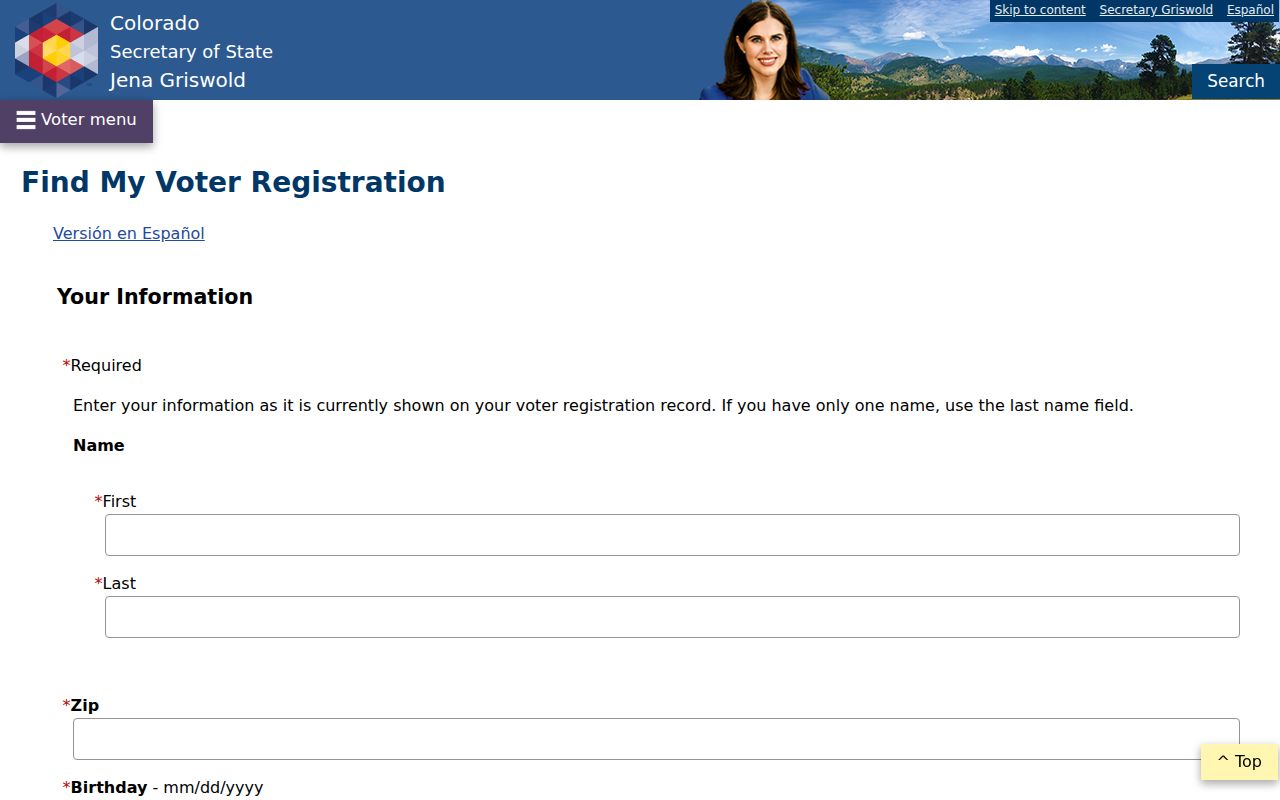
The Colorado Online Voter Registration Lookup asks for first name, last name, ZIP code, and a birthday in mm/dd/yyyy form. Use the registered spelling. The official instructions suggest trying a prior ZIP. A recent move might explain a no-result. Confidential voters stay hidden. Some voters under 18 may not appear either. So absence from the public result never proves absence from the county rolls.
| Field | Type | Directory meaning |
|---|---|---|
| First and last name | Required text | Registered spelling and name order control the match. |
| ZIP code | Required text or number | Dated election geography clue, not a city-limit test. |
| Birthday | Required date | Full input for the personal lookup; month and day remain confidential in released data. |
| Public fields | Released subject to protection | Name, residential address, affiliation, birth year, and prior-election participation may be available. |
Pueblo County Elections also fills report requests by mail, email, or in person. The form covers name, physical and mailing address, birth year, registration date, party, active or inactive status, jurisdiction, precinct, and up to five election histories. Fees and delivery choices are listed. Confidential fields remain closed to every request.
The Colorado voter lookup shows the required fields and the confidentiality warning.
A Pueblo Court Hit in Context
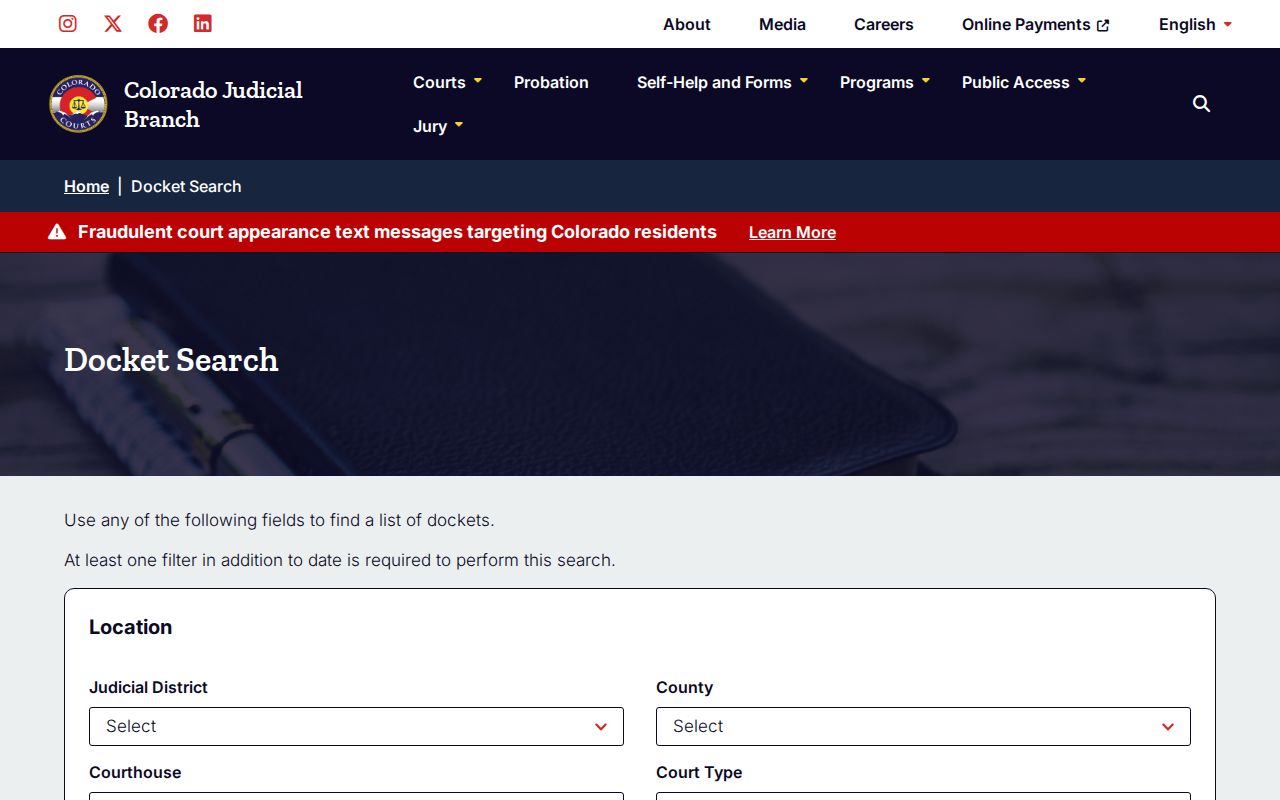
The Colorado Judicial Branch docket search adds a dated identity signal. Pick Pueblo County or Pueblo Combined Court first. Then add a party, case, or attorney field. Controls run from judicial district, county, courthouse, court type, division, and date range to case year, case class, sequence, party type, and attorney details.
A result row can show date, time, name, case number, hearing type, location, appearance type, and courtroom, while the weekly calendar view shifts constantly. Export and print controls are built in. A docket event proves a scheduled public appearance. It establishes no residence, disposition, conviction, or status.
For the underlying record, the current Colorado request form accepts family, criminal, civil, probate, register-of-action, and certified or exemplified document requests. Copies, searches, certification, research, and redaction carry separate charges. Juvenile, sealed, suppressed, protected, and family material can require identification or remain unavailable.
The Colorado Judicial docket page illustrates the location and party filters used for Pueblo records.
Public Business Signals in Pueblo
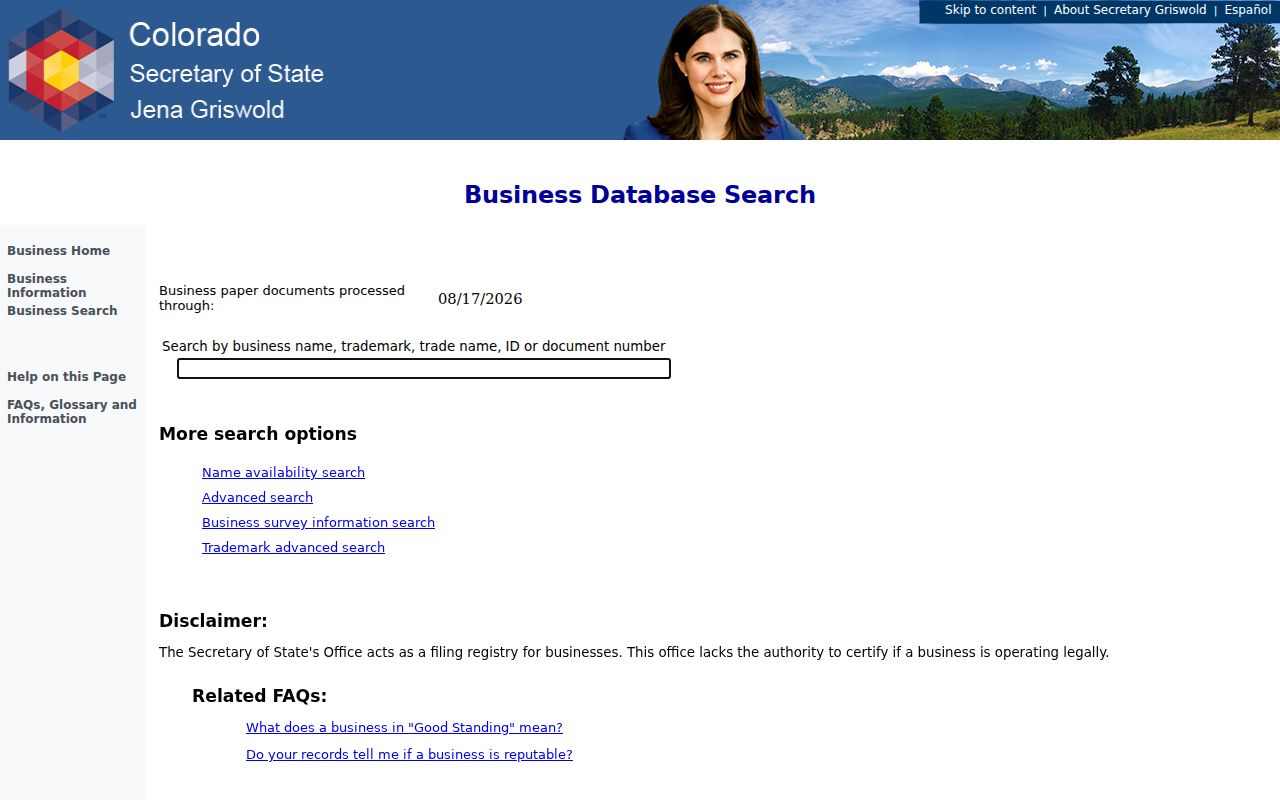
The Colorado Secretary of State database searches business name, trademark, trade name, ID, or document number. DORA's license lookup adds profession, license number, both name fields, business name, city, state, and ZIP. City licensed-business lists add DBA name, status, and address. Together they confirm a public Pueblo connection.
Keep that role separate from residence. A license address is not a home. Save the entity ID, license number, effective date, status, board or custodian, and direct document link. UCC and notary searches add other public filing clues. Neither replaces the Recorder's deed or a court's certified disposition.
The Colorado Secretary of State business search shows the source fields for an organizational name clue.
Today’s Pueblo Resident Record Sources
Pueblo directory work compares sources built for different purposes. The comparison table keeps each record's role visible. It avoids calling every public name a resident and points to the right custodian when a portal ends.
| Source | Who It Lists | Keeper | Access |
|---|---|---|---|
| Assessor parcel card | Owner, mailing, situs, transfer and legal-description fields | Pueblo County Assessor | Online search and GIS |
| Voter lookup or report | Registration and election geography when released | Pueblo County Elections and Colorado SOS | Personal lookup or request form |
| Recorder index | Grantor, grantee, instrument, date, and reception trail | Clerk and Recorder | Free index, counter, email, or request |
| City archive | Dated council, planning, preservation, business, or public-process appearance | City of Pueblo | Archive search or CORA route |
| License or entity filing | Public professional, business, or organizational connection | DORA, SOS, or City of Pueblo | Official lookup or request |
Use the Pueblo resident lookup workflow for one person. A street or parcel question needs address-keyed records. A historical household belongs on the directory shelf, not with the current assessor alone.
Pueblo’s Obituary and Vital Clues
The Pueblo City-County Library District obituary search takes last name, first name, sort, and order. Scanned Pueblo Chieftain obituaries can yield a dated death clue, relatives, a funeral home, or an organization. The PDF scans are free. A mailed USPS copy costs $3. The library warns the mail route may take about 90 days. Historical Society Chieftain microfilm spans 1868 through 1970.
Handle the clue with care. An obituary is family-supplied, not a certified vital record. Pueblo County Public Health controls birth, death, fetal-death, and ledger certificates under confidentiality and eligibility rules. A dated obituary can explain why an older directory entry ends or why a parcel record changes, but protected family detail should stay unpublished.
Pueblo Privacy Rules Shape Results
A missing name does not always mean a move. Nor is it always a misspelling in the Pueblo residents directory. Colorado's voter rules can suppress confidential records. The Address Confidentiality Program supplies a substitute legal address for qualifying survivors. Court, vital, juvenile, sealed, and protected records can be withheld or redacted. The Colorado Privacy Act grants rights against covered controllers. It cannot erase a county deed. Court dockets and voter records stay too. So does a historical newspaper that another law requires a custodian to keep.
Use the official correction or confidentiality route. Ask Elections about protected status. Ask Public Health about eligibility. Ask the court clerk about a protected filing. Take indexing or redaction problems to the Recorder. Never test a hidden address by combining unrelated public fields.
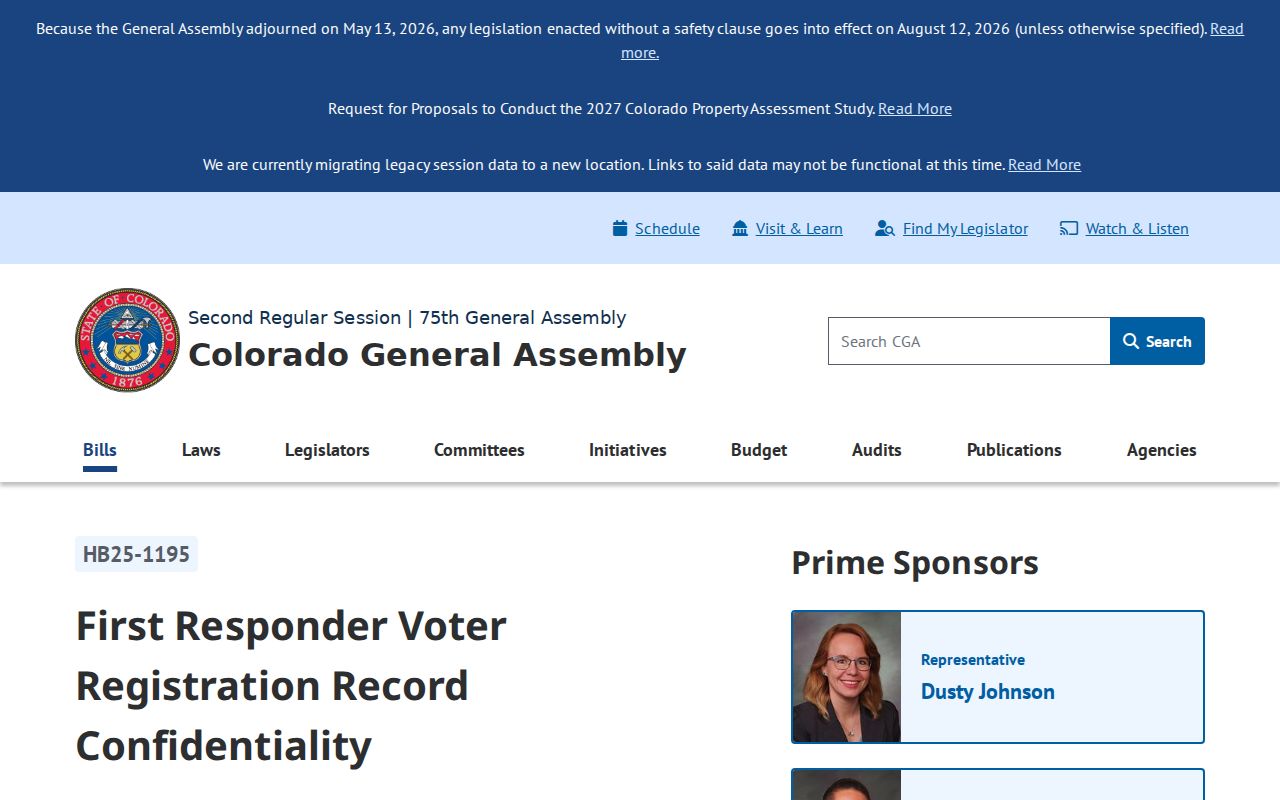
The Colorado legislative record for HB25-1195 documents a first-responder and spouse voter-confidentiality route.
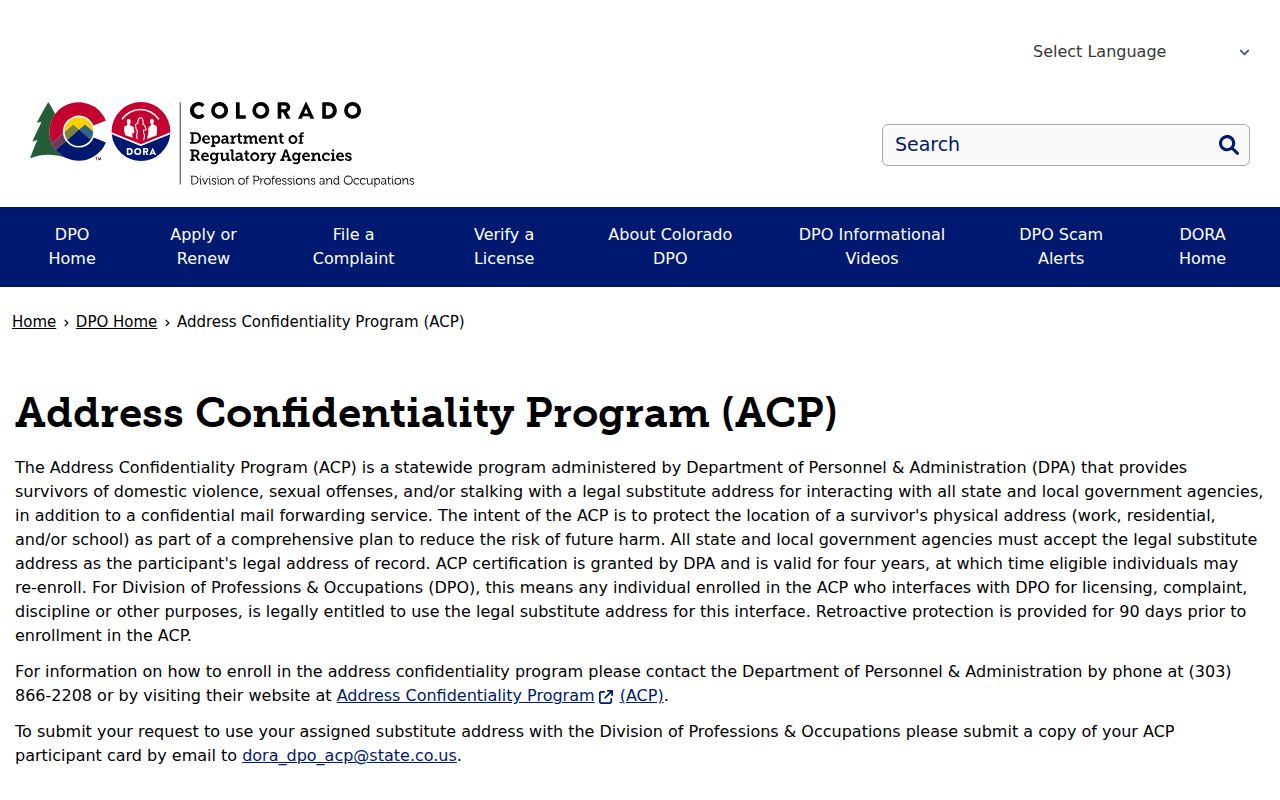
The Colorado Address Confidentiality Program explains the substitute-address route for qualifying survivors.
Two Sources Make a Better Pueblo Match
A directory note should carry more than a name. Record the type of record, the office, the date, the identifier, and the field it sat in. Labels matter here. An owner on a deed is not a voter. A mailing recipient is not a docket party. A city directory entry might name a person, a household, or even a business. A court docket only records an event. Keeping each label intact stops the next researcher from stitching unrelated Pueblo names together.
Before a lead counts as a working identification, two independent signals should agree. A parcel ID can tie an assessor result to a Recorder instrument. A case number can tie a docket to a disposition request. A directory year can be checked against a census or obituary date. When the official portal leaves a gap, say so plainly. A careful note about uncertainty beats an invented answer every time.
| Signal | Second check | Do not infer |
|---|---|---|
| Assessor owner | Recorder deed, legal description, transfer date | Current occupant |
| Voter match | Registration context, birth year, second official source | Protected fields or ballot choice |
| Historical directory | Edition, page, map, obituary, or census | Current residence |
| Court party | Case number, disposition, court and date | Residence or legal outcome |
Note: Record the source field that supports a conclusion, not just the person’s name.
Pueblo’s Historical Directory Shelf
The Pueblo Historical Society Edward Broadhead Library holds complete city directories going back to 1871. Maps, cemetery files, oral histories, yearbooks, and Pueblo Chieftain microfilm from 1868 through 1970 share the shelves. Upstairs at Rawlings Library, the third-floor Local History and Genealogy service offers catalog help, microfilm readers, obituary scans, and digital collections. A directory year can yield a name, address, occupation, business, or an owner and occupant mark. But it never converts an old entry into a current residence.
Historic Pueblo's house-research instructions lay out the street sequence. Street listings begin in 1914 and run through 1927. After 1927, a separate street listing sits in the back of each book. Earlier volumes may take page-by-page inspection. So try spelling variants and record the edition year and page. This is where a past address gets tested. A deed chain is joined to a modern parcel only after that.
The full Pueblo city directory treatment walks through the collections. Sample entries, Sanborn maps, Chieftain material, and the household tracing method follow from end to end.