
Finding Pueblo Residents by Record Type
The Pueblo residents directory is best approached as a sequence. A name, street, parcel, ZIP, business, or historical year points to a different custodian. The county assessor can connect a name to an owner or a situs parcel. Elections can confirm a public registration record when the required inputs are available. A court docket supplies a dated case event. The Historical Society and Rawlings Library supply older people and address clues. None of those roles should be blended into a claim that a person currently lives at a particular place.
Start with the least sensitive clue already known. Keep the exact spelling, the date searched, and the field that produced the result. A directory search becomes much stronger when a parcel number, case number, middle initial, license number, or edition year agrees with a second source. A no-result can reflect a protected voter, a moving date window, an incomplete digitization run, or a street name that changed.
- Write down the full name, spelling variants, known ZIP or street, and the reason for the search.
- Run the Pueblo County Assessor search by owner, location, or parcel, then label owner, mailing, and situs fields separately.
- Use the Colorado voter lookup only with a lawful full name, ZIP, and birthday, and test a prior ZIP when the official instructions suggest it.
- Check the Colorado Judicial docket with Pueblo County or Pueblo Combined Court, a narrow date range, and the party fields.
- For an older clue, compare the Historical Society directories, Rawlings catalog, Chieftain material, obituary scans, and maps by year.
Where Pueblo Keeps Resident Records
Pueblo County divides the resident trail among offices. The Clerk and Recorder holds deeds, plats, surveys, military records, and other permanent records. The Assessor presents parcel, owner, mailing, situs, value, transfer, and tax information. Elections handles registration and election reports with field-level confidentiality rules. Colorado courts, Public Health, city archives, libraries, and state licensing systems answer narrower questions. The office that holds a clue determines what the clue means.
Pueblo County Clerk and Recorder
215 W 10th Street, second floor
Pueblo, CO 81003
719-583-6507
Pueblo County Assessor Route
Property information and map services
Pueblo County, CO
719-583-6100 for property context
Pueblo County Elections
201 W 8th Street, seventh floor
Pueblo, CO 81003
719-583-6620
Recording and Elections are at different floors and serve different records. Recorder questions can go to recording@pueblocounty.us. Elections requests can use the county Information Request form, mail route, email, or the counter. A request should name the record, date, address, and desired output rather than ask for a general list of residents.
What a Pueblo Address Actually Means
Pueblo’s May 2010 City-County Addressing Standards separate a site address, building address, establishment address, and mailing address. The city grid uses First Street and Santa Fe Avenue as baselines. County references use I-25 and US Highway 50. Numbers are generally odd on the north and west sides and even on the south and east sides, with exceptions for circular streets.
Units, suites, rear structures, private drives, and multiple buildings can create distinct address entries under one base number. The master address system preserves an alias roadway name for historical renaming or common use. Preserve the old form beside the current form. A street lookup that normalizes away the old spelling can miss a directory, plat, deed, or Sanborn reference.
The Pueblo addressing standards are therefore part of a residents directory search. They explain why a postal last line, parcel situs, voter address, and historical entry may not match word for word.
Recorder Names Along the Trail
The Pueblo County Recorder’s online index is a free starting point for grantor and grantee names, instrument type, reception number, and recording date. Its disclaimer compares the index to a library card catalog. It points to documents but is not the deed image. Search spelling variants. County recording staff also warn that real-estate digitization has gaps and remains in progress.
When a record matters, move from the index to the actual instrument. Note the legal description, party role, plat or lot language, reception number, image status, and any gap. The Recording Division at 215 W 10th Street can help with an undigitized record by phone, email, counter request, mail, or a specific CORA request. Index access, image plans, copy charges, and research time have separate rules.
Note: An index hit is a lead to a deed or other instrument, not a certified statement that a named person lived at the property.
Pueblo Permit Trails Change by Place
Address-keyed permits can add an applicant, contractor, project, or inspection date to a Pueblo record trail. The custodian depends on physical jurisdiction and issue date. City of Pueblo and Boone permit work moved to the Southern Colorado Building Department during 2026. The public page lists searches, permits, plan review, licensing, codes, and forms, but the complete unauthenticated field set was not verified.
For older records, the Pueblo County historical permit lookup covers records issued before 2026 and searches by permit number, address, or contractor. Status choices include Final, Active, Flagged, Void, and Expired. Inspection choices include Final, Complete, Partial, No Final Given, and Rejected. Unincorporated county work uses the County Building Division and its current route. A permit connects a record to a place or project, not necessarily to a home.
Official Rolls Versus Compiled Search Tools
Official Pueblo sources expose a defined record field and a responsible custodian. A commercial people-finder category may combine old filings, marketing data, and address associations into a paid report. The category can merge names, preserve stale entries, omit protected records, and make the source trail hard to audit. It is not the keeper of a Pueblo deed, voter record, vital certificate, or court disposition.
| Question | Official source | What to verify |
|---|---|---|
| Who is tied to a parcel? | Assessor and Recorder | Owner, mailing, situs, legal description, instrument and date |
| Was a person registered? | Colorado SOS or Pueblo Elections | Required inputs, registration field, date, and confidentiality status |
| What happened in court? | Colorado Judicial Branch | Court, case number, hearing, disposition, and access limit |
| Who appears in an old source? | Historical Society, Rawlings, Chieftain, or archive | Edition, page, reel, address role, and year |
Source-aware searching takes longer at the start but leaves a record another researcher can check. That matters in family history, heir research, reconnecting, and civic questions where a bare name is not enough.
Pueblo Voter Lookup Fields
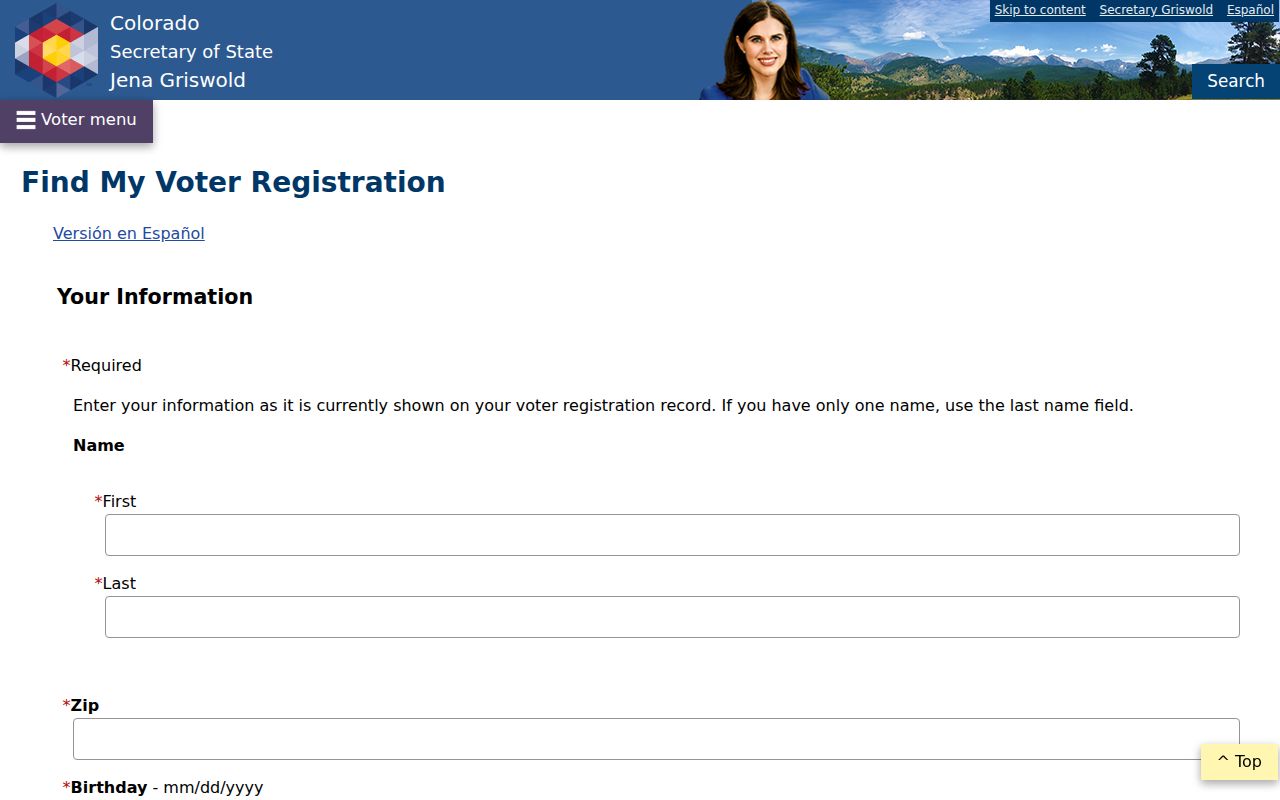
The Colorado Online Voter Registration Lookup requires first name, last name, ZIP code, and birthday in mm/dd/yyyy form. Use the registered spelling. The official instructions recommend trying a prior ZIP when a move may explain a no-result. Confidential voters and some voters under 18 may not appear, so absence from the public result is not proof of absence from the county.
| Field | Type | Directory meaning |
|---|---|---|
| First and last name | Required text | Registered spelling and name order control the match. |
| ZIP code | Required text or number | Dated election geography clue, not a city-limit test. |
| Birthday | Required date | Full input for the personal lookup; month and day remain confidential in released data. |
| Public fields | Released subject to protection | Name, residential address, affiliation, birth year, and prior-election participation may be available. |
Pueblo County Elections also accepts a report request by mail, email, or in person. The form can ask for name, physical and mailing address, birth year, registration date, party, active or inactive status, jurisdiction, precinct, and up to five election histories. County reports and maps have listed fees and delivery choices. Confidential fields remain closed.
The Colorado voter lookup shows the required fields and the confidentiality warning.
A Pueblo Court Hit in Context
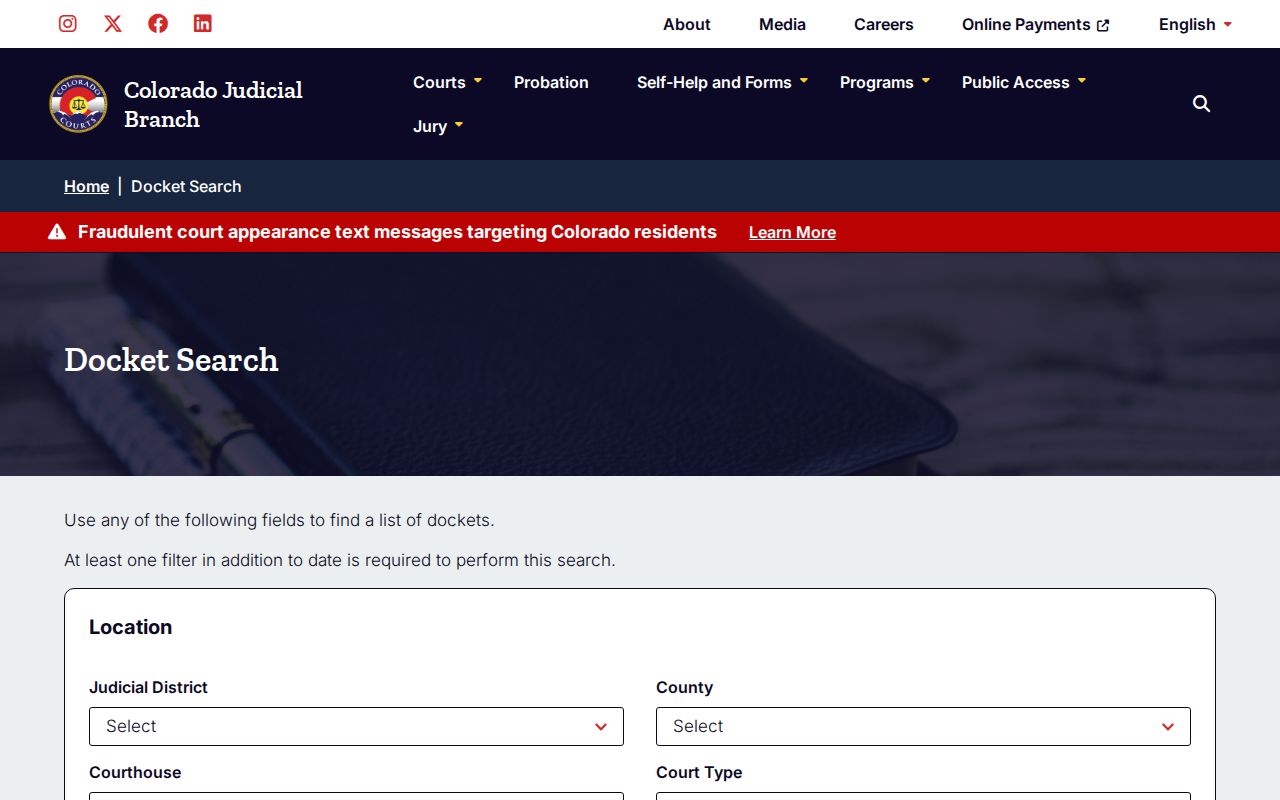
The Colorado Judicial Branch docket search adds a dated identity signal. Select Pueblo County or Pueblo Combined Court, then add a narrow date range and a party, case, or attorney field. Visible controls include judicial district, county, courthouse, court type, division, date range, case year, case class, sequence, individual or business party, and attorney details.
A result can display date and time, name, case number, hearing type, location, appearance type, and courtroom. The captured July 31, 2026 one-week view showed a moving result set and offered export and print controls. A docket event establishes a scheduled public appearance. It does not establish a residence, final disposition, conviction, or present status.
For the underlying record, the current Colorado request form accepts family, criminal, civil, probate, register-of-action, and certified or exemplified document requests. Copies, name searches, certification, research, and redaction have different charges. Juvenile, sealed, suppressed, protected, and family material can require identification or remain unavailable.
The Colorado Judicial docket page illustrates the location and party filters used for Pueblo records.
Public Business Signals in Pueblo
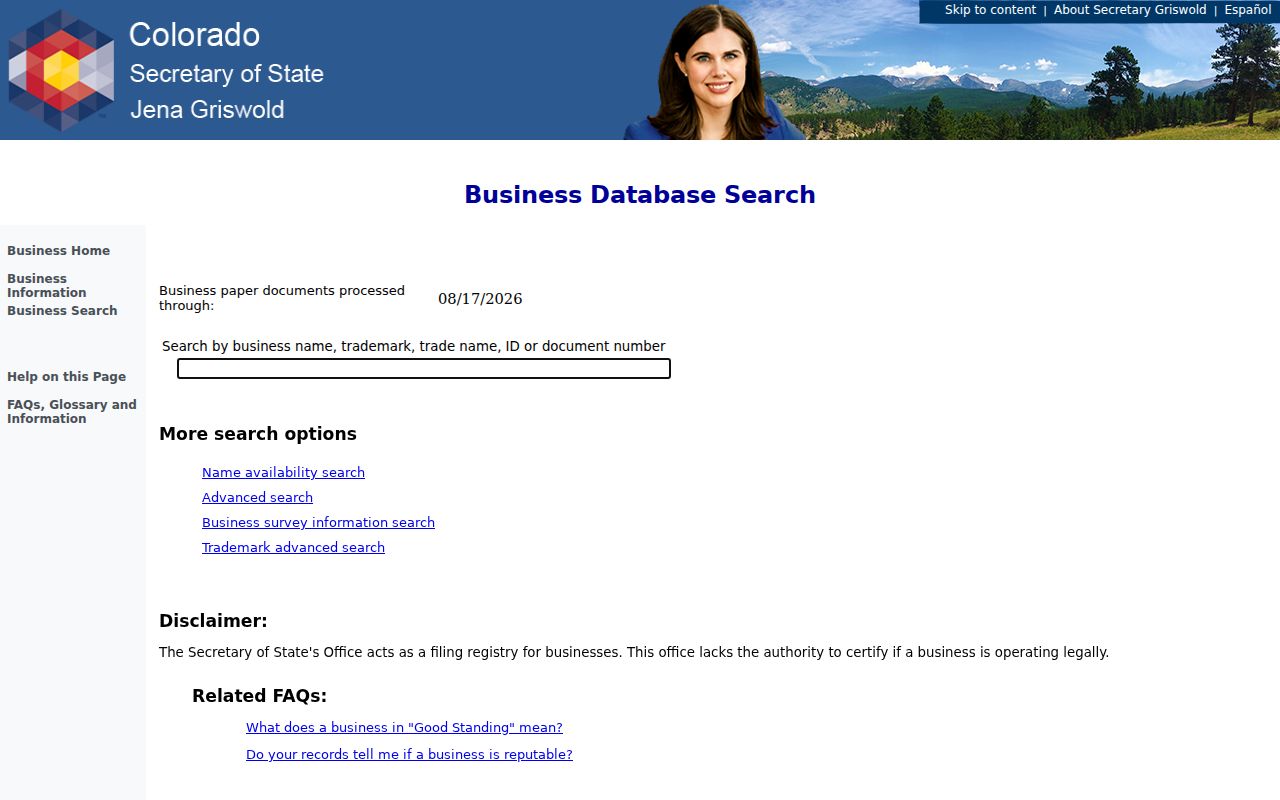
The Colorado Secretary of State database searches business name, trademark, trade name, ID, or document number. DORA’s license lookup adds profession, license number, last name, first name, business name, city, state, and ZIP fields. City licensed-business lists can show DBA name, status, address, city, state, and ZIP. These sources help confirm a public organization or professional connection in Pueblo.
Keep that role separate from residence. A registered office, license address, permit applicant, or business-list entry does not prove a natural person’s home. Save the entity ID, license number, effective date, status, board or custodian, and direct document link. UCC and notary searches add other public filing clues, but neither replaces the Recorder’s deed or a court’s certified disposition.
The Colorado Secretary of State business search shows the source fields for an organizational name clue.
Today’s Pueblo Resident Record Sources
Current Pueblo directory work is a comparison of sources with different purposes. The table below keeps the record role visible. It avoids calling every public name a resident and points to the right custodian when a portal ends.
| Source | Who It Lists | Keeper | Access |
|---|---|---|---|
| Assessor parcel card | Owner, mailing, situs, transfer and legal-description fields | Pueblo County Assessor | Online search and GIS |
| Voter lookup or report | Registration and election geography when released | Pueblo County Elections and Colorado SOS | Personal lookup or request form |
| Recorder index | Grantor, grantee, instrument, date, and reception trail | Clerk and Recorder | Free index, counter, email, or request |
| City archive | Dated council, planning, preservation, business, or public-process appearance | City of Pueblo | Archive search or CORA route |
| License or entity filing | Public professional, business, or organizational connection | DORA, SOS, or City of Pueblo | Official lookup or request |
Use the Pueblo resident lookup workflow when the question is one person. A street or parcel question belongs with address-keyed records. A historical household belongs with the directory shelf, not the current assessor alone.
Pueblo’s Obituary and Vital Clues
The Pueblo City-County Library District obituary search accepts last name, first name, sort, and order. Scanned Pueblo Chieftain obituaries can supply a dated death clue, relatives, a funeral home, or an organization. PDF scans are free. A mailed USPS copy costs $3, and the library says the mail route may take about 90 days. The Historical Society’s Chieftain microfilm runs from 1868 through 1970.
Use the clue with care. An obituary is family-supplied and is not a certified vital record. Pueblo County Public Health controls birth, death, fetal-death, and ledger certificates, with confidentiality and eligibility rules. A dated obituary can explain why an older directory entry ends or why a parcel record changes, but it should not be used to publish protected family detail.
Pueblo Privacy Rules Shape Results
A missing name in the Pueblo residents directory does not always mean a move or a bad spelling. Colorado’s voter rules can suppress confidential records. The Address Confidentiality Program supplies a substitute legal address for qualifying survivors. Court, vital, juvenile, sealed, and protected records can be withheld or redacted. The Colorado Privacy Act supplies rights against covered controllers, but it does not erase a county deed, court docket, voter record, or historical newspaper that another law requires a custodian to retain.
Use the official correction or confidentiality route. Ask Elections about protected status, Public Health about eligibility, the court clerk about a protected filing, and the Recorder about an indexing or redaction issue. Do not test a hidden address by combining unrelated public fields.
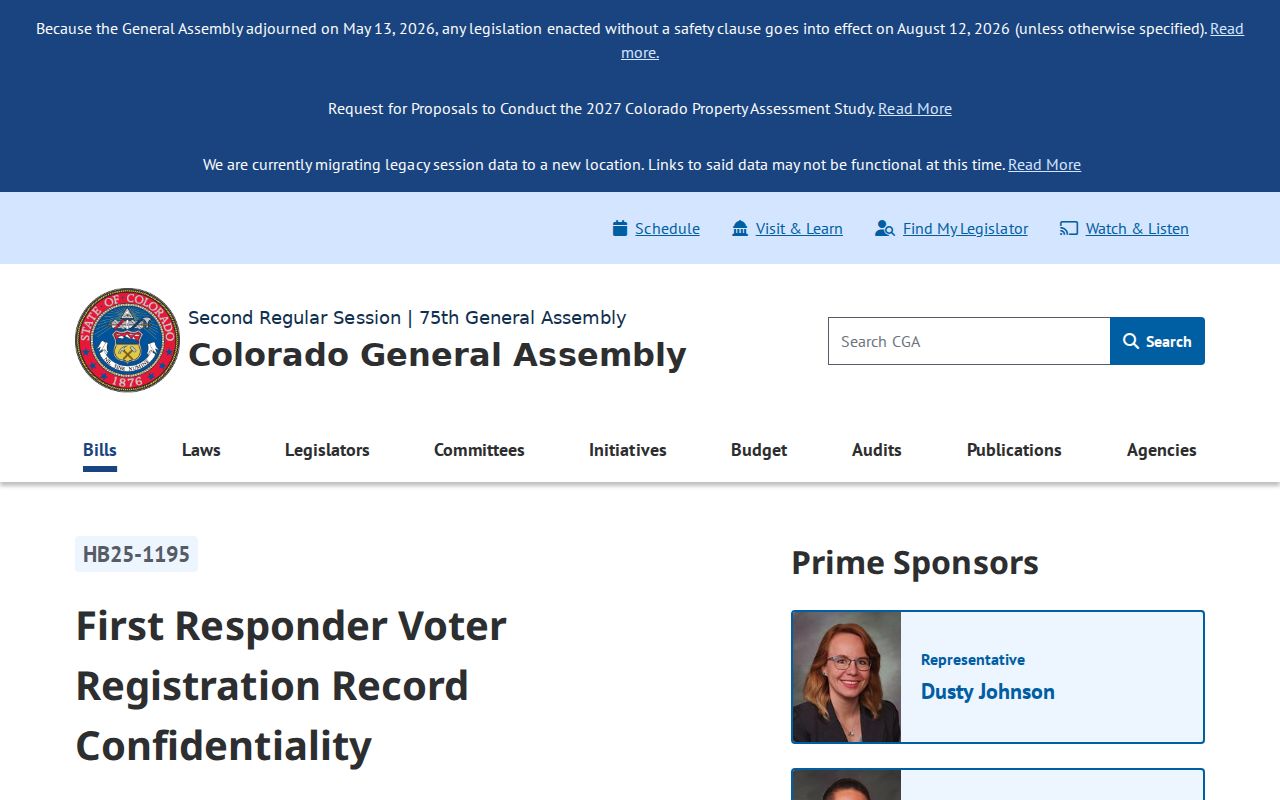
The Colorado legislative record for HB25-1195 documents a first-responder and spouse voter-confidentiality route.
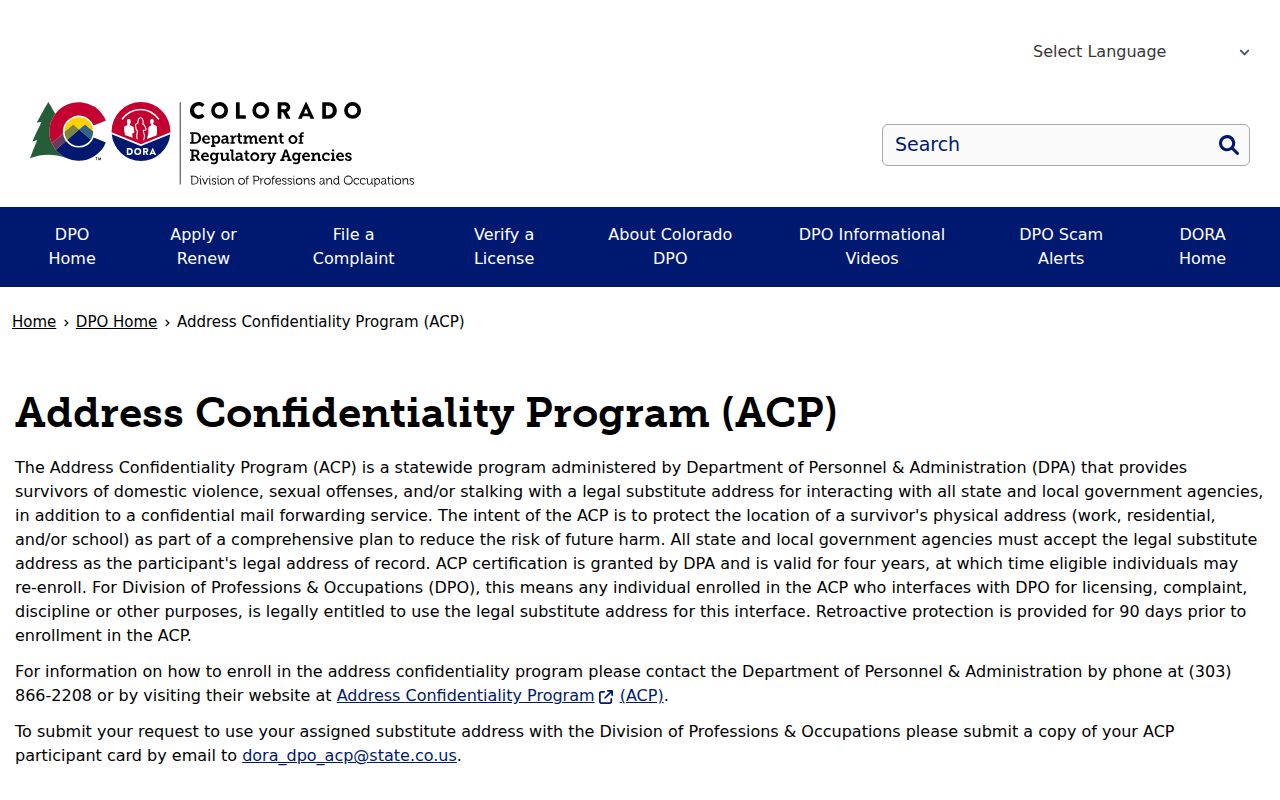
The Colorado Address Confidentiality Program explains the substitute-address route for qualifying survivors.
Two Sources Make a Better Pueblo Match
The best resident-directory note is not a bare name. It states the exact record type, office, date, identifier, and placement field. An owner is an owner. A mailing recipient is a mailing recipient. A voter is a registration clue. A directory entry may be a person, business, or household listing. A docket party is a court event. Each label protects the next researcher from joining unrelated names.
Use two independent, compatible signals before treating a lead as a working identification. A parcel ID can join an assessor result to a Recorder instrument. A case number can join a docket to a disposition request. A directory year can be compared with a census or obituary date. If the official portal is incomplete, state that gap. A careful uncertainty note is more useful than an invented answer.
| Signal | Second check | Do not infer |
|---|---|---|
| Assessor owner | Recorder deed, legal description, transfer date | Current occupant |
| Voter match | Registration context, birth year, second official source | Protected fields or ballot choice |
| Historical directory | Edition, page, map, obituary, or census | Current residence |
| Court party | Case number, disposition, court and date | Residence or legal outcome |
Note: Record the source field that supports a conclusion, not just the person’s name.
Pueblo’s Historical Directory Shelf
The Pueblo Historical Society Edward Broadhead Library reports complete city directories beginning in 1871. Its shelves also include maps, cemetery information, oral histories, yearbooks, vertical files, and Pueblo Chieftain microfilm from 1868 through 1970. Rawlings Library’s third-floor Local History and Genealogy service adds catalog help, microfilm readers, obituary scans, and digital collections. A directory year can show a name, address, occupation, business, or owner and occupant mark, but it does not turn a historical entry into a current residence.
Historic Pueblo’s house-research instructions give the useful street sequence: street listings begin in 1914 and run through 1927, a separate street listing appears in the back after 1927, and earlier books may require page-by-page inspection. Search spelling variants. Preserve the edition year and page. The historical shelf is the place to test a past address before a deed chain is joined to a modern parcel.
The full Pueblo city directory treatment follows the collections, sample entries, Sanborn maps, Chieftain material, and household tracing method end to end.